Ozempic or Hypnosis? A New York Hypnotherapist on Weight Loss, Agency, ad Food Noise.
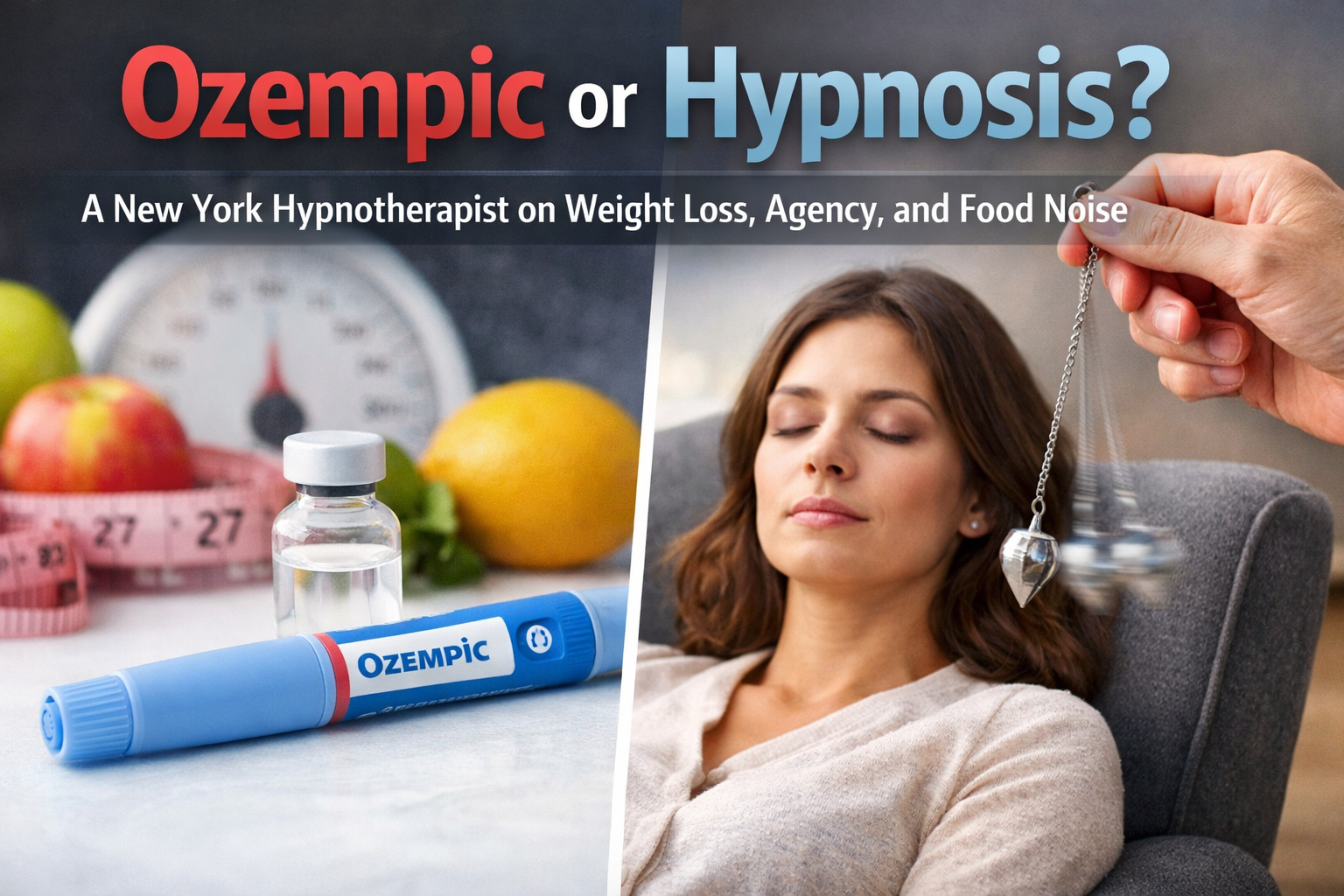
For many years, weight loss was a central focus of my hypnosis and hypnotherapy practice in New York City.
Five to six years ago, nearly 40% of my clients came specifically for weight loss hypnosis. Most were women and men in their 30s and 40s — Manhattan professionals, creatives, and high performers — aware, health-conscious, and familiar with what we now call food noise: the constant mental pull toward eating, snacking, or soothing through food.
Over the past few years, that number dropped dramatically — today closer to 5%.
This shift wasn’t because New Yorkers stopped caring about weight or health. It coincided almost exactly with the rise of Ozempic and Mounjaro.
Acknowledging the Benefits of Ozempic for Weight Loss
It’s important to be clear and balanced: for many people, Ozempic and Mounjaro are genuinely beneficial.
For individuals with diabetes, insulin resistance, or significant obesity, these medications can be medically appropriate and life-changing. They reduce appetite, stabilize blood sugar, and make weight loss possible where other methods may have failed.
This is not a “medication versus hypnosis” argument.
However, in a city like New York — where wellness trends move quickly — many people began using these medications beyond medical necessity, or longer than originally intended. And that’s where a more nuanced conversation began.
When Weight Loss Works — but Agency Feels Reduced
Many clients who eventually returned to my New York City hypnotherapy practice didn’t come back because Ozempic “didn’t work.”
They came back because something felt off.
They described:
A loss of personal agency
A feeling of being disconnected from their own choices
Anxiety about side effects or long-term use
A subtle sense of “this isn’t really me doing this”
Discomfort with nausea
While food noise was reduced, it wasn’t reduced by them. For highly self-aware people, that distinction matters.
Ozempic as a Shortcut — Helpful, but Not Instructive
From a hypnotherapy perspective, Ozempic and Mounjaro function as biological shortcuts.
They alter gut-brain signaling, reduce hunger cues, and quiet compulsive urges around food. But shortcuts don’t teach the nervous system how that state was achieved.
The subconscious mind doesn’t learn:
how to regulate desire
how to pause before reward-seeking
how to create calm without suppression
Eventually, many people ask:
“How do I sustain this without relying on medication?”
That question opens the door back to hypnosis.
Hypnosis After Ozempic: Where Do You Go Next?
Many of my current clients seeking hypnosis for weight loss in New York come after Ozempic or Mounjaro.
They often say:
“I’ve tried it.”
“I know how it feels when food noise is quiet.”
“I don’t want to depend on it.”
“I want to do this naturally now.”
This is the post-Ozempic phase — not rejection, but integration.
How Hypnosis for Weight Loss Can Mimic the Ozempic Experience
One advantage of working with clients post-Ozempic is that they now have clear internal reference points.
They can describe:
How their appetite changed
How quickly they felt full
How emotional eating diminished
How decision-making around food felt calmer and simpler
In hypnotherapy, we use this information intentionally.
Rather than guessing what “healthy eating” should feel like, hypnosis helps recreate the internal state they experienced on medication — but through subconscious training instead of chemistry.
Hypnotherapy for Food Noise and Emotional Eating
Most eating behavior isn’t driven by hunger.
It’s driven by subconscious reward algorithms.
Patterns like:
Eat → relief
Eat → comfort
Eat → reward
Hypnosis works by making these patterns conscious, slowing them down, and re-programming them.
Clients learn to:
Notice triggers before compulsion takes over
Pause without force or deprivation
Create new reward associations
Relate to food with neutrality instead of urgency
This isn’t willpower.
It’s subconscious re-patterning.
Can You Use Hypnosis While on Ozempic?
Yes. Some clients choose to work with hypnosis while taking Ozempic or Mounjaro.
In these cases, hypnotherapy helps:
Build sustainable habits
Reduce fear around stopping medication
Strengthen internal regulation
Prepare for long-term independence
For others, hypnosis becomes the next step after medication.
Sustainable Weight Loss Is About Agency, Not Suppression
The goal of hypnosis is not to fight appetite or suppress desire.
It’s to help the nervous system learn:
how to experience choice
how to regulate reward calmly
how to respond rather than react
In other words, to internalize what medication temporarily externalized.
A New Weight-Loss Conversation in New York City
In New York, the conversation around weight loss is evolving.
It’s no longer:
medication or mindset
biology or psychology
It’s about sequence and integration.
For some, Ozempic is the beginning. For others, it’s a learning phase.
And for many, hypnosis becomes the method that turns that experience into long-term self-trust and sustainability.
The post-Ozempic era isn’t about judgment. It’s about asking:
“Now that I know what quiet feels like — how do I create it myself?”
That’s where hypnosis and hypnotherapy are uniquely effective.

Elena Mosaner, MS, is a Certified Hypnotherapist, Master NLP Practitioner, and ICF Certified Coach with over 15 years of experience in helping people with habit-building, conquering fears, confidence-building, performance, and other personal development and wellness issues. She is also an author and the founder of HypnoCloud, a digital hypnotherapy app. Contact NYC hypnotherapy for your complimentary 15-minute consultation.